

If your cycles are unpredictable and you’re in the TTC trenches, you might feel like you’re constantly guessing — or missing your fertile window altogether. But with the right tools and patience, it is possible to find your ovulation, even if it’s different every month.
Step 1: Start Tracking Your Cycle With Premom
If you’ve been using the Flo app, that’s a great place to start. It’s helpful for understanding your average cycle length, so don’t delete it — you can still pull valuable insights from it.
But if you’re serious about tracking ovulation with long or irregular cycles, download the Premom app. This app was my saving grace. After using it for just one cycle, it started to learn my pattern and predict my fertile window — which made a huge difference when it came to knowing when to test and time intercourse.
Step 2: Use LH Strips Daily
Start using LH (Luteinizing Hormone) strips about 10 days before you think you might ovulate. For example, if your cycle tends to be around 50 days, begin testing from day 25–30 and continue daily — ideally in the afternoon when LH is more detectable.
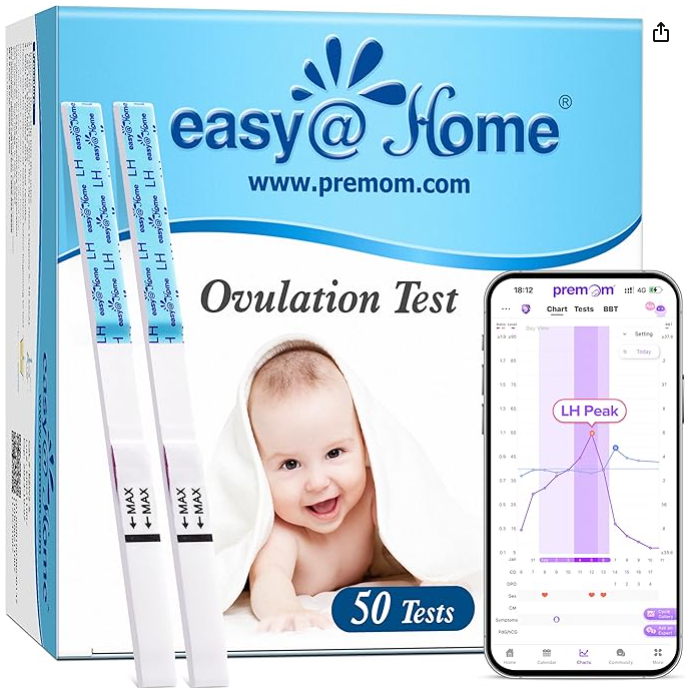
Keep going until the test line is as dark or darker than the control line. That’s your LH surge, and it usually means ovulation is about 12–36 hours away.
The Premom app makes this process easier by letting you photograph each test strip and track your results with a number — which is a game-changer when the lines are hard to interpret by eye.
Step 3: Track Cervical Mucus (CM)
Your cervical mucus changes throughout your cycle and is a powerful indicator of fertility. Here’s what to look for:
- Dry or sticky: Not fertile
- Creamy or lotion-like: You might be getting close
- Wet, stretchy, egg-white-like: FERTILE! This is the ideal time to conceive
In the month I conceived, I had actually given up on LH testing because my body had so many false LH surges. The only reason I tested one more time — the morning before my actual LH peak — was because I noticed my CM was very stretchy. That was the sign I needed.
Step 4: Use Clearblue Advanced Ovulation Tests (Optional, but Helpful)
These digital ovulation tests track estrogen rise and LH surge, giving you “High” and “Peak” fertility readings. They’re especially helpful if you have long or confusing cycles, or if your LH levels rise and fall multiple times (which is very common with PCOS or hormonal imbalances).
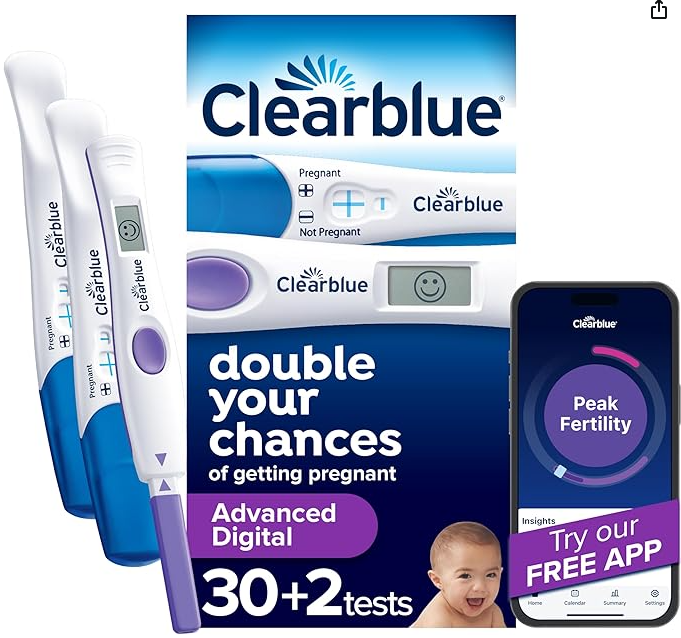
In some cycles, Clearblue gave me clarity when LH strips alone were confusing. Even when my LH was high, the tests would show “low” if my estrogen hadn’t risen yet — which meant I wasn’t truly in my fertile window. That stopped us from jumping the gun too early.
That said, it’s not always perfect. One cycle, I had a “High” reading for 6 straight days before my LH peak. We burned ourselves out baby dancing too early and missed the most important days. Everyone’s estrogen pattern is different — some have a slow rise, others a sharp spike. The cycle I conceived, I had a very quick estrogen surge.
Step 5: Time Intercourse Strategically
Once your body gives you signs of peak fertility — like egg-white CM, a “Peak” Clearblue reading, or a positive LH strip — aim to baby dance 2–3 times during that window. Ideally every other day, or daily if energy allows.
With long cycles, it’s so easy to burn out if you’re trying too often, too early. The key is quality timing, not constant effort.
During the cycle I conceived, we baby danced every 2–3 days in the lead-up to ovulation. Then we made sure to have sex two days before ovulation and on ovulation day — which are scientifically two of the highest fertility days in the entire cycle.
Step 6: Track your BBT to confirm you’ve ovulated and to track your BBT in your Luteal Phase (this is important!)
Once you think you’ve ovulated based on LH strips or CM, the only way to confirm it actually happened is by tracking your Basal Body Temperature (BBT).
BBT is your body’s lowest resting temperature, taken first thing in the morning before you get out of bed. After ovulation, progesterone rises — and this causes your temperature to rise slightly (usually by about 0.3–0.5°C or 0.5–1.0°F). If you see this sustained rise for at least three days, it’s a strong sign that you did ovulate.
Here’s how to do it:
- Use something to track your BBT. Your cheapest option is a BBT thermometer, but personally, I found that the most stress free and accurate option was using an Apple Watch. Not only did it take my bbt without me having to do a thing, but it was always accurate. I found that tracking with a BBT thermometer was never as accurate and sometimes I would forget to do it and therefore it became unhelpful during my luteal phase so I stopped using it after 1 cycle.
- Take your temp at the same time each morning, right when you wake up. Again, your Apple Watch will do this for you automatically. I think if you’re serious about TTC and it’s been longer than 3 months, you should invest in one of these. My apple watch actually saved me from an early miscarriage, which I explain in depth in this post “How Tracking My BBT and Apple Watch Saved My Baby in Early Pregnancy“. So personally I think it’s invaluable.
- Record your BBT it in Premom, which will chart it for you. If you have been doing this for a few cycles, you will be able to see what your bbt looks like in your luteal phase, making it extremely helpful during the awful two week wait.
- BBT also helps track early pregnancy and tracks if your progesterone is dropping too early
This step helped me understand my cycle so much better — especially when LH surges were confusing or when I wasn’t sure if my body had actually released an egg. For example, I had months where I had an LH surge but no temp rise, which meant I probably didn’t ovulate.
BBT won’t predict ovulation, but it will help you confirm it — and that’s just as important, especially when you’re trying to learn your patterns and time future cycles more accurately.
What Didn’t Work For Me:
Not everything I tried was helpful. Here’s what didn’t work — and why:
- Randomly guessing ovulation based on apps alone: Most apps assume a 28–30 day cycle, which isn’t accurate for long cycles or women with PCOS. Relying on app predictions alone can cause a lot of missed fertile windows.
- Trying to baby dance every other day all month long: It’s exhausting and unrealistic, especially if you have kids already. Once I learned to trust my fertile signs, I could time things better and with much less stress.
- Over-supplementing without data: I tried too many supplements early on without truly understanding my hormonal picture. It taught me the importance of tracking and testing before trying to “fix” things.
- Stressing about my cycles: This was a big one. I had two cycles in a row where I was obsessively anxious about when I was going to ovulate — and in both cases, ovulation was delayed. My body was clearly responding to the stress. The moment I relaxed, let go of control, and stopped checking constantly, I ovulated. Your nervous system plays a bigger role in fertility than you might realise.
What happened the cycle I concieved?
The cycle I conceived was far from straightforward. My LH levels were all over the place for nearly two weeks. On three separate occasions, my LH strips showed what looked like an approaching peak—around 0.56 to 0.63—which is the level I usually see right before I ovulate. But every time, it dropped again the next day.
To make things more confusing, I was also using the Clearblue Advanced Digital Ovulation Tests (and honestly, if you have long or irregular cycles, I highly recommend them—they give you vital information about your estrogen levels, not just LH). Each time I got a “high” LH result, I followed it up with a Clearblue test, expecting to see a flashing smiley face (high fertility). But each time, the screen was blank: low fertility.
That told me something important—there was no estrogen surge, which usually comes before LH peaks. It was like my body wanted to ovulate but just… couldn’t get there. I felt like I was doing everything right—eating well, managing stress, timing intimacy—and yet it still wasn’t working.
By cycle day 25, I felt emotionally exhausted. This was around the time I normally ovulate in my longer cycles, and still… nothing. I was devastated. I remember thinking:
“That’s it. I can’t keep putting myself through this. I’m not testing anymore. I’m just going to wait for my next cycle and stop trying to control what I clearly can’t.”
So I stopped tracking. I surrendered.
Then Something Surprising Happened
Four days later, on cycle day 29, I woke up to stretchy cervical mucus—one of the key signs of your fertile window. I figured what the heck, I’d test again. And to my surprise, my LH had jumped to 0.71—the highest I’d seen that whole cycle. We baby danced that night, though I still didn’t let myself get too hopeful.
The next morning, I tested again with both a strip and a Clearblue test—and I was shocked to see a static smiley face on the digital: peak fertility! I kept testing throughout the day, and my LH surged to 1.44 on Premom—my highest peak ever. (There’s some evidence that a stronger LH surge may be linked to better egg quality, and that gave me a little hope.)
The following day, my LH dropped to 0.72, confirming it was my ovulation day. I knew it was happening—I could feel it, like I had ever since my miscarriage. I ovulated around 2–3pm, and we baby danced just a few hours later. My ovulation was confirmed the next day with a spike in my temperature.
That cycle, we had timed intercourse 2 days before ovulation and on ovulation day itself—even though I knew I had probably already ovulated, I still felt it was worth it.
Why Do LH Surges Rise and Fall?
If you’ve ever seen your LH go up slightly, only to drop the next day, you’re not alone. This can happen for a few reasons—especially if you have long or irregular cycles, mild PCOS-spectrum traits, or are hormonally sensitive.
Here’s what might be going on:
- Your body is gearing up to ovulate but something delays it—like stress, inflammation, or low estrogen.
- The brain signals the ovaries to release an egg (LH rise), but the egg isn’t quite ready, so ovulation doesn’t happen.
- Your body then tries again a few days later, creating multiple mini “false starts” before you finally peak.
This is why a single LH surge isn’t always enough to confirm ovulation. You may need to wait for that true, sustained peak—and ideally, combine it with other signs like cervical mucus or estrogen tracking (which the Clearblue Advanced test is great for).
Why Estrogen Matters Just as Much as LH
LH gets most of the attention when tracking ovulation—but estrogen rises before LH and gives a critical heads-up that ovulation is approaching. Without that estrogen rise, LH might climb a little, but you won’t ovulate. That’s exactly what happened in your cycle, Jade—those false LH rises were missing that key estrogen companion.
Tracking both helps you understand the full picture:
| Hormone | When It Rises | What It Means |
|---|---|---|
| Estrogen | ~3–4 days before ovulation | Body is preparing to ovulate |
| LH | ~24–36 hours before ovulation | Ovulation is imminent |
Tip: If you get confusing LH results, combine your strip tests with a test that tracks estrogen (like Clearblue Advanced). It can save you a lot of second-guessing.
TTC Takeaway: When Your Body Struggles to Ovulate
- Multiple LH rises don’t always mean you’ve ovulated. Your body may be trying—but not quite there yet.
- Cervical mucus + estrogen signs are key to confirming the fertile window, not just LH.
- Don’t be discouraged by false starts. Sometimes it takes a few tries before your body actually releases an egg.
- It’s okay to take breaks from testing when it becomes too emotionally exhausting. For me, letting go of control briefly helped reset everything—and I still caught ovulation when it finally happened.
I hope some of this blog post helps you in your TTC journey!
